 Citerank
Playbook: research, write and publish content that gets cited
The workflow for creating a page AI engines are likely to cite: research what the engines search for, brief it, write it answer-first, check it before publishing, then track it.
Step by step
- Pick the question #
Choose a question buyers ask that you have no strong page for, from Topical Authority, Prompt Library or Competitor Prompt Finder.
- Research the fan-out #
Run Fan-Out Mapper (or Fan-Out Analyzer) for the sub-queries the engines search.
- Brief it #
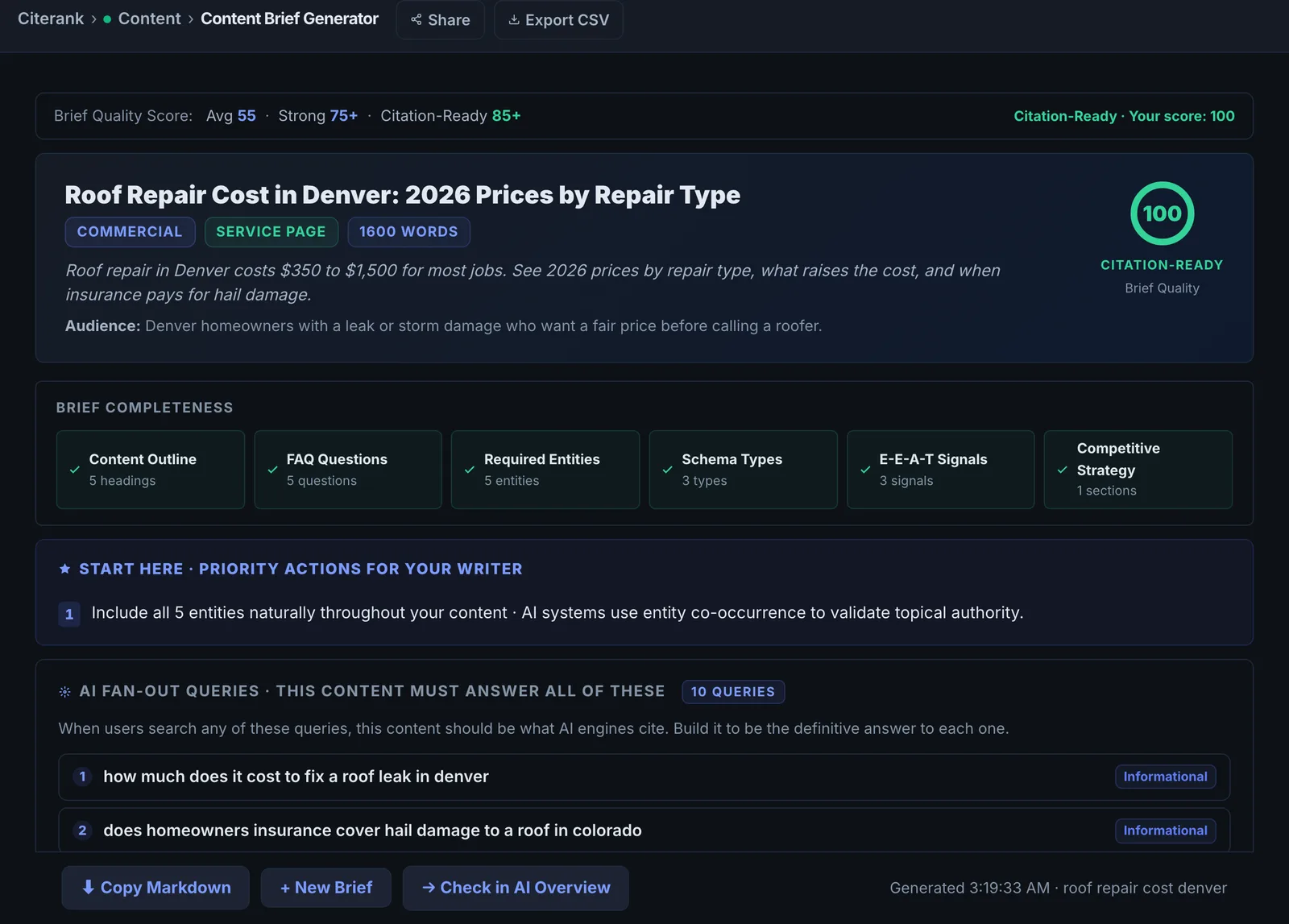
Generate a Content Brief from the live top 10 and add the fan-out sub-queries as sections.
- Write it #
Write in the AI Content Editor, answer-first, watching the live score.
- Check before publishing #
Run the draft through Citation Predictor and fix the top items.
- Publish with schema #
Generate schema for the page and publish it, or deploy with Citerank Deploy.
- Track it #
Add the question to Prompt Tracking and run Passage Citations once the page is indexed.
The goal#
Publish pages built to be the source an AI engine needs, instead of hoping a general article gets picked.
What makes content citable#
- Answer first. Each section opens with a direct, complete answer in one or two sentences.
- Self-contained passages. A section makes sense quoted on its own, with names instead of "it" and "this".
- Covers the fan-out. It answers the sub-questions the engine searches for, not just the headline question.
- Specific. Numbers, names, dates, prices and examples, not generalities.
- Different. Something the existing pages do not have: your data or experience (Semantic Benchmark measures this).
- Structured. Question headings, lists and tables where they help, and matching schema.
The workflow in detail#
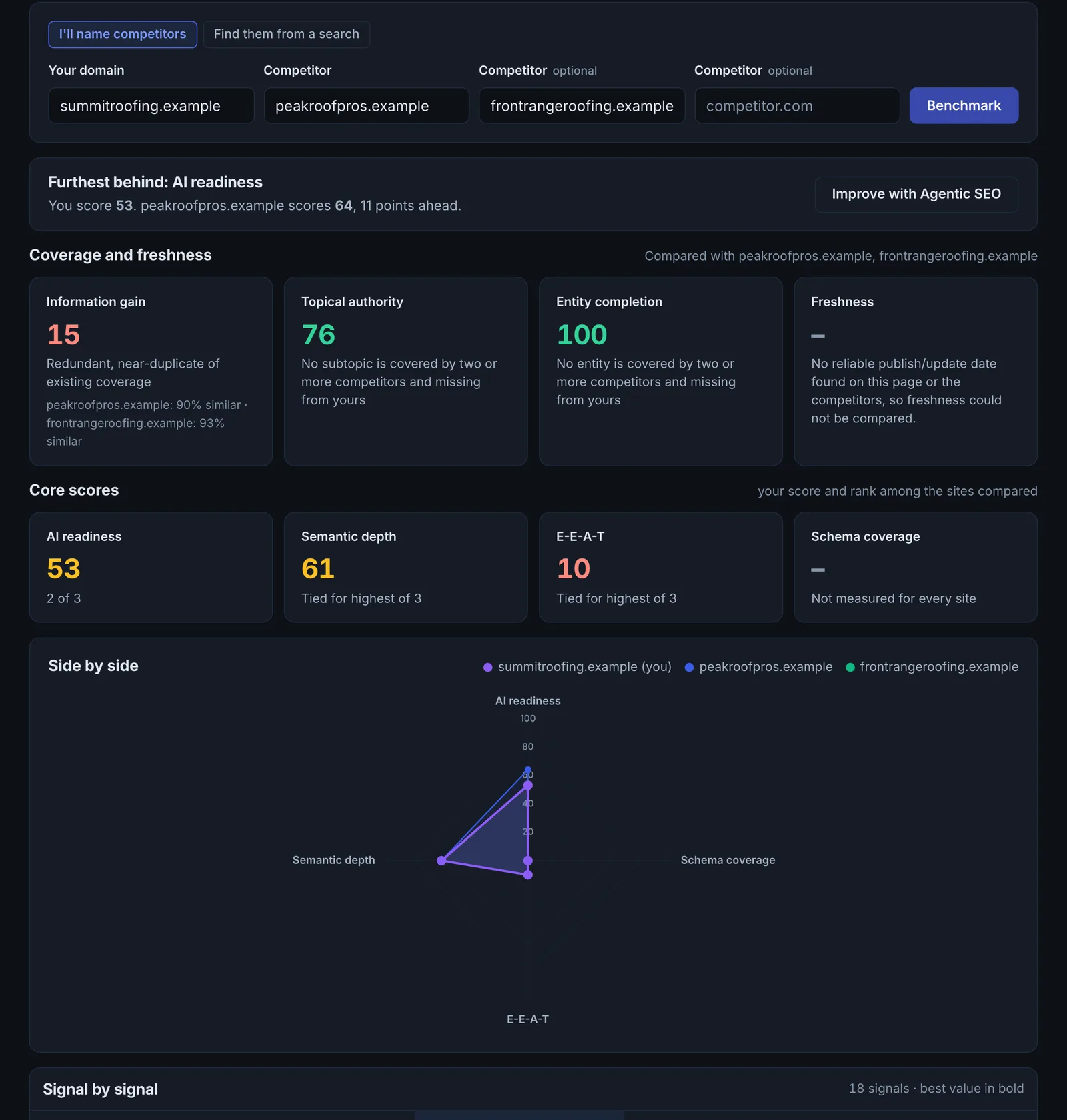
- Research: Fan-Out Mapper gives the sub-queries with evidence of where each came from. Keep the aspects with the most sub-queries.
- Brief: Content Brief adds the live top 10 and keyword data. Merge the two into one outline.
- Write: AI Content Editor scores direct answers, factual density, readability and People Also Ask coverage as you write.
- Check: Citation Predictor compares the draft with today's AI Overview.
- Publish: add schema from the Schema Generator, and link the page from related pages.
- Track: Prompt Tracking and Passage Citations show whether and which passage gets cited.
Questions
How long should the page be? #
Should I use AI to write it? #
Something here does not match what you see in the app? Tell us and we will fix the guide.