 Citerank
Playbook: your first AI visibility audit of a site
A complete first AI visibility audit of a site in about an hour, in the order that avoids wasted work: can AI read it, does AI know who it is, are the key pages citable, and who wins the answers today.
Step by step
- Create the project #
Add the domain in Projects and record two or three competitors you actually meet in deals.
- Score it #
Run the AI Visibility Score. Note the weakest dimensions.
- Check AI access #
Run View as AI Crawler on the home page. If any AI crawler is blocked or gets different content, that is fix number one.
- Audit the money pages #
Run the Page Auditor on the home page and the two or three pages that earn the most revenue.
- Crawl the site #
Run the Site Crawler as GPTBot to find blocked, broken and buried pages across the site.
- Check the entity #
Run Knowledge Graph Consistency to see whether Google and Wikidata know the brand.
- Measure citations #
Run AI Overview Citation Intel (no keywords needed) or Citation Tracker on 5 to 10 core questions.
- Turn it into a plan #
Run the 30-Day Action Plan and share Domain Hub with the client.
The goal#
Find out, in one sitting, why a site is or is not showing up in AI answers, and leave with a prioritised plan. The steps above are the order to work in. Below is what to look for at each one and what "good" looks like.
1. Access: can AI read the site?#
Tools: View as AI Crawler, Site Crawler.
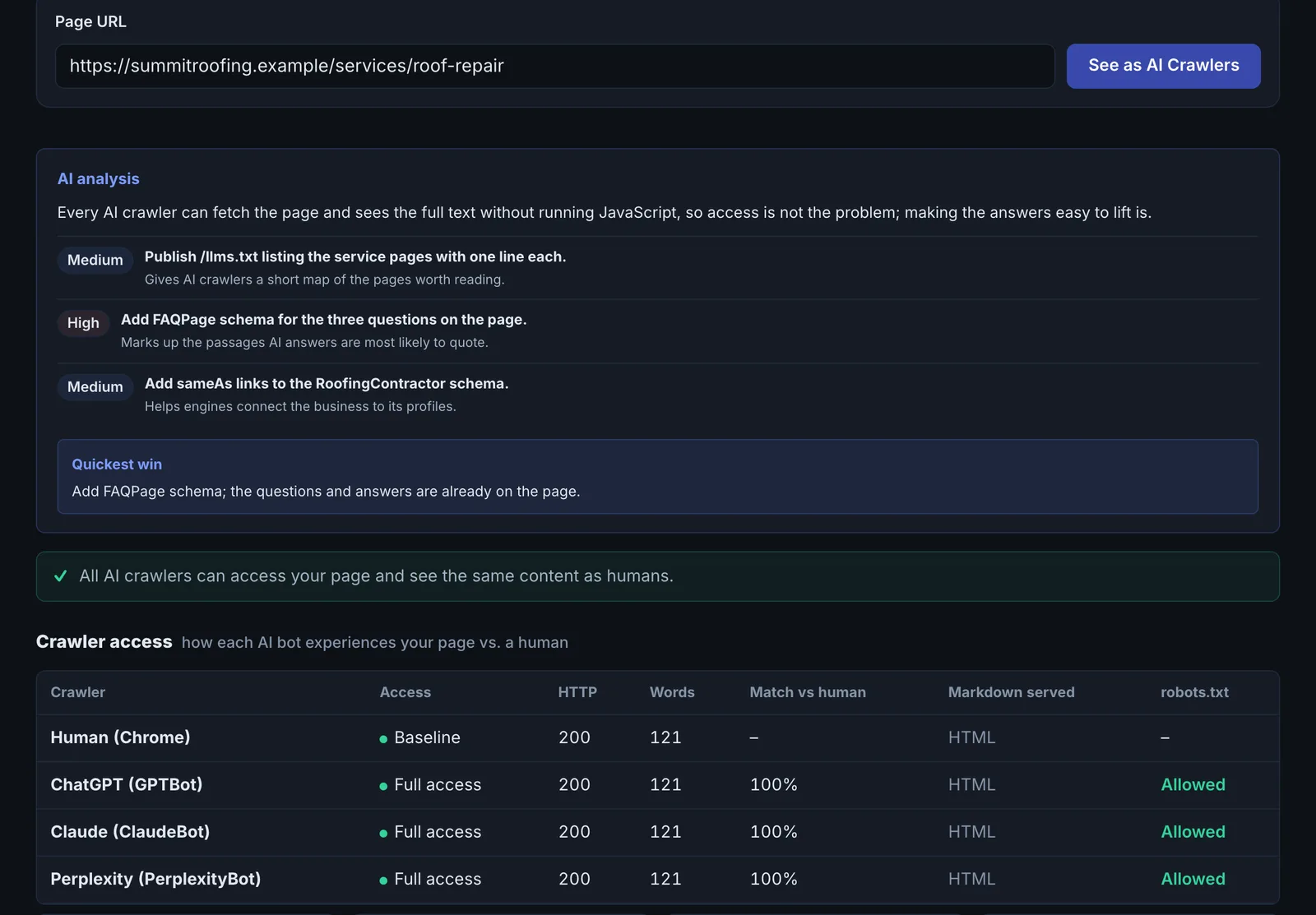
Good looks like: GPTBot, ClaudeBot and PerplexityBot allowed in robots.txt; the same content served to them as to a browser; key content present in the HTML without JavaScript; no important pages blocked or buried more than three clicks deep.
If this fails, stop and fix it first. Nothing later matters until AI crawlers can read the pages.
2. Identity: does AI know who this is?#
Tools: AI Visibility Score (Schema & Entity and Entity & Brand dimensions), Knowledge Graph Consistency.
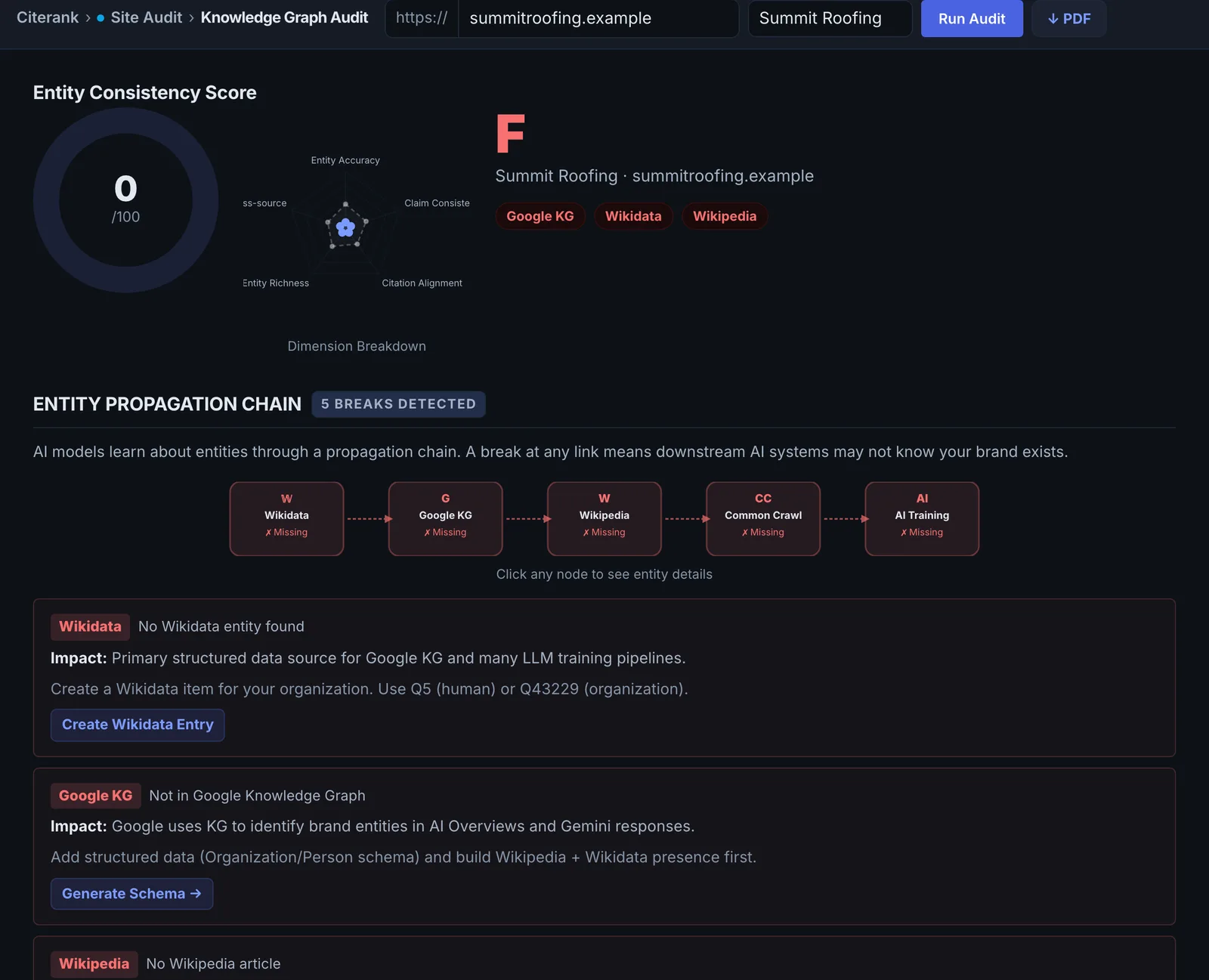
Good looks like: Organization or LocalBusiness schema on the home page with a stable @id and sameAs links to official profiles; consistent name and facts across Google, Wikidata and the site.
3. Pages: are the key pages citable?#
Tools: Page Auditor.
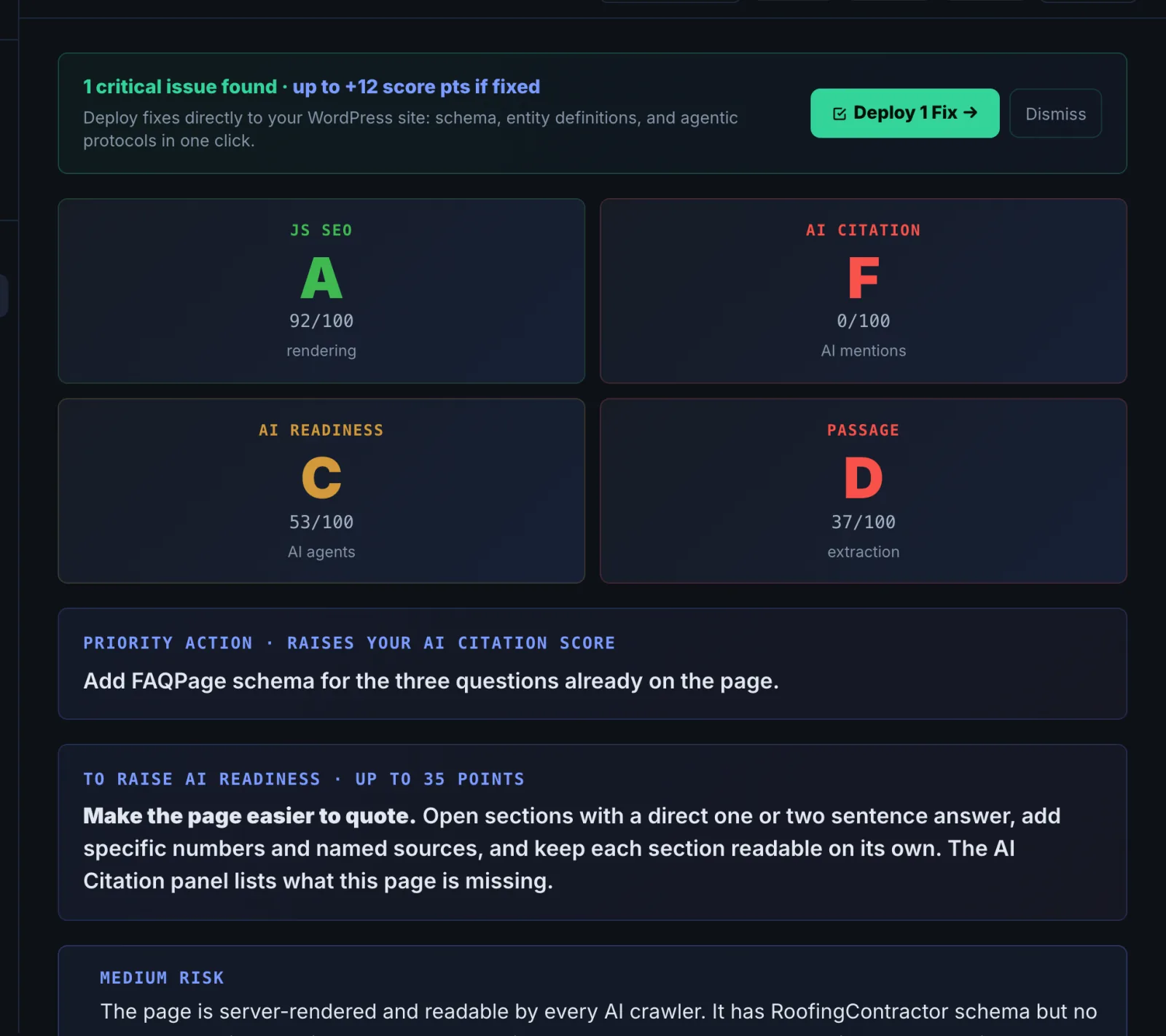
Good looks like: each money page answers its main question in the first lines of a section, has the right schema type linked to the Organization, and scores well on passages.
4. Citations: who wins the answers today?#
Tools: AI Overview Citation Intel or Citation Tracker.
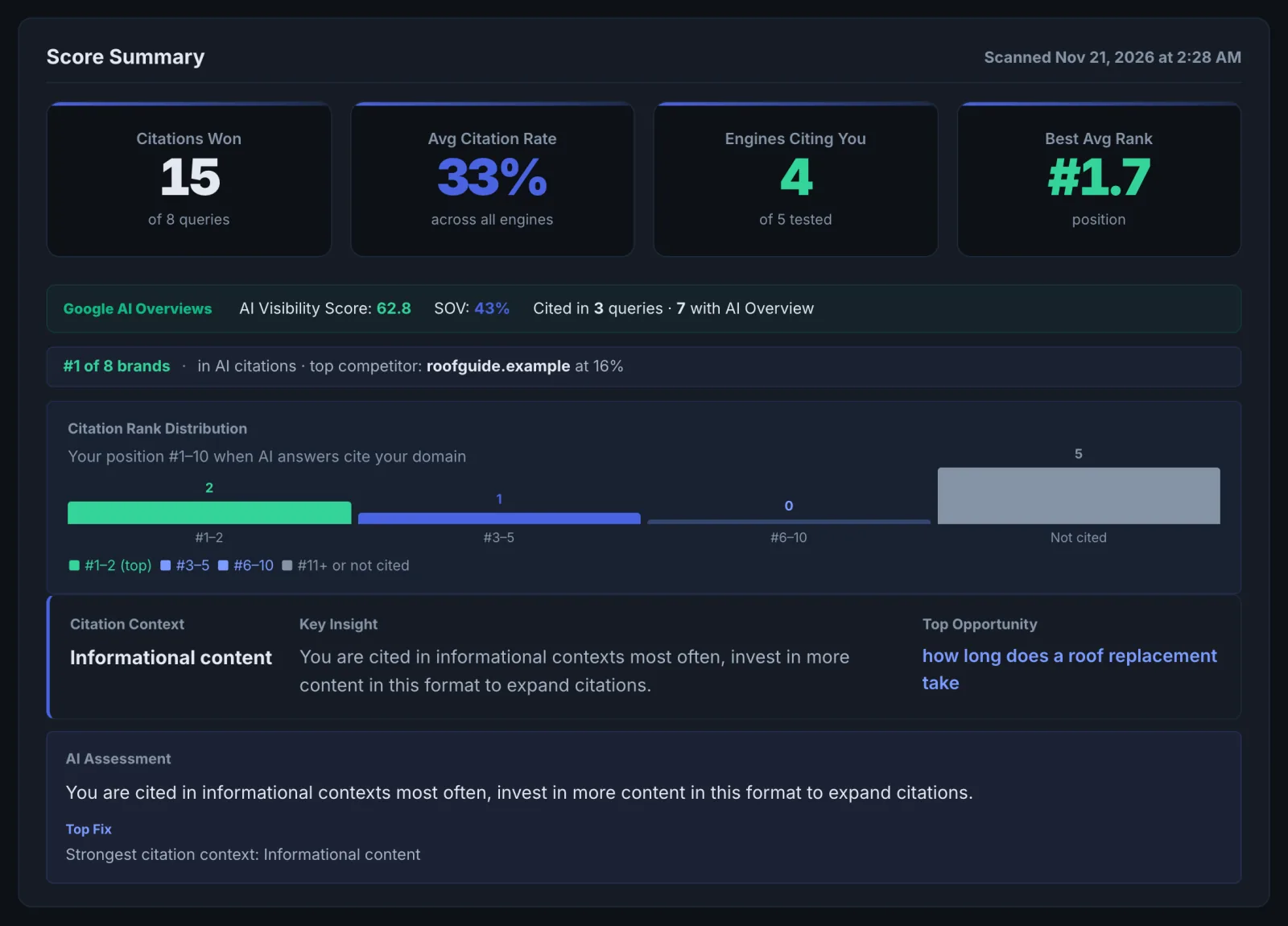
Good looks like: you know your share of voice on the core questions and which competitors and third-party sites win the rest.
5. The plan#
Tools: 30-Day Action Plan, Domain Hub.
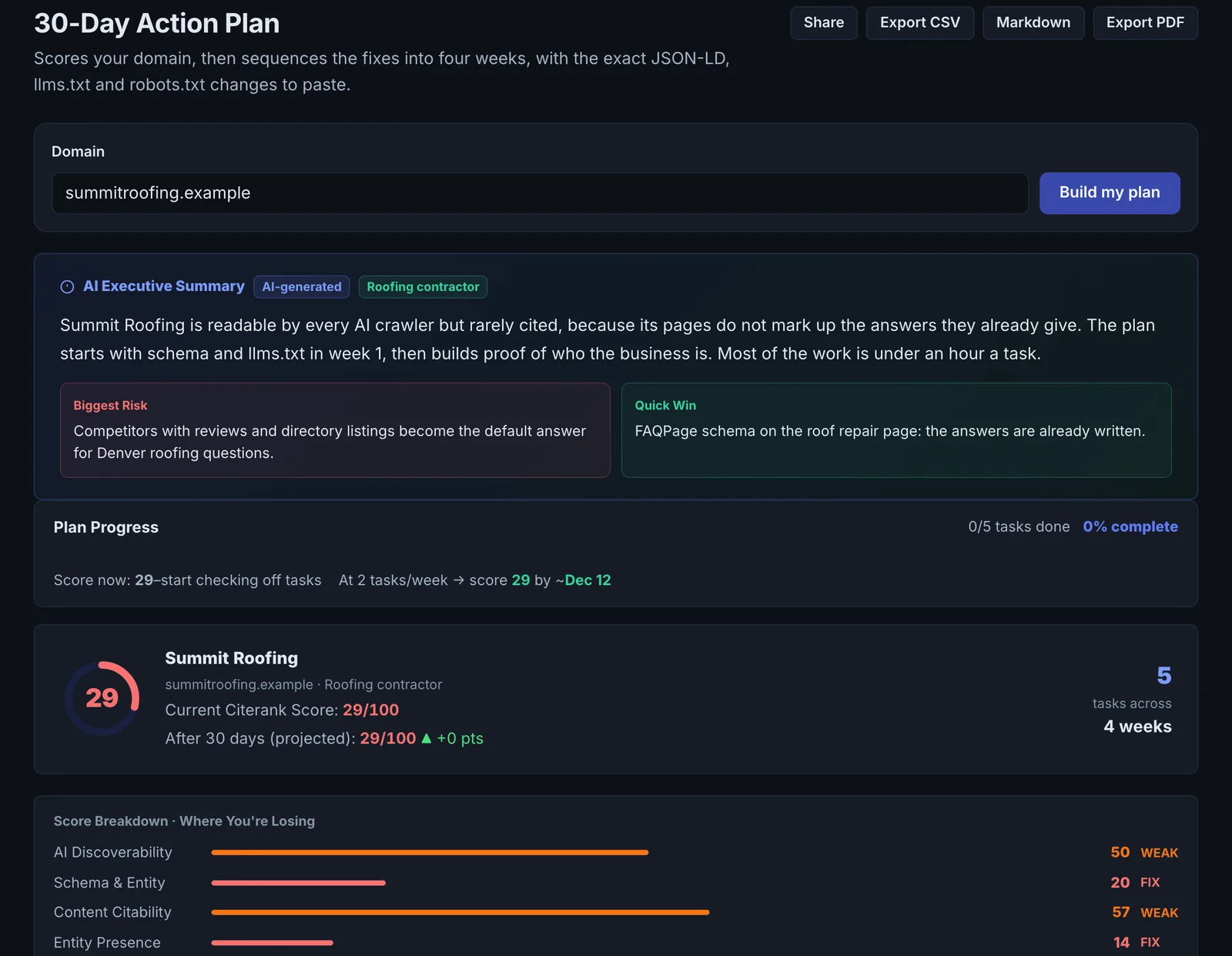
Order the work: access fixes, then identity, then pages, then content and off-site work. Put the core questions into Prompt Tracking so next month shows movement.
Questions
Why this order? #
How many checks does it use? #
Something here does not match what you see in the app? Tell us and we will fix the guide.