 Citerank
Playbook: win a question a competitor owns in AI answers
How to take a specific AI answer from a competitor: find out why each engine cites them, close the gap on your page, get onto the sources the engines trust, and prove the change.
Step by step
- Pick the question #
Choose a question with buying intent where a competitor keeps being cited, from Prompt Tracking's Rival column or Citation Tracker.
- Diagnose #
Run Why Not Cited? on the question for the per-engine root cause.
- Compare the pages #
Run Citation Gap against the competitor and Passage Citations on your page for the question.
- Cover the fan-out #
Run Fan-Out Mapper on the question and check which sub-queries your page and theirs cover.
- Fix the page #
Rewrite the answer passage answer-first, add the missing sub-topics and specifics, and add the right schema.
- Fix the sources #
Run Off-Site Mention Gap and get included on the pages engines cite that name the competitor.
- Measure #
Use check now in Prompt Tracking after recrawl, then let the monthly checks confirm.
The goal#
One question, one competitor, one measurable win. Doing this well for a single high-value question teaches the pattern you then repeat.
Why the competitor wins#
There are usually three layers, and you need all three:
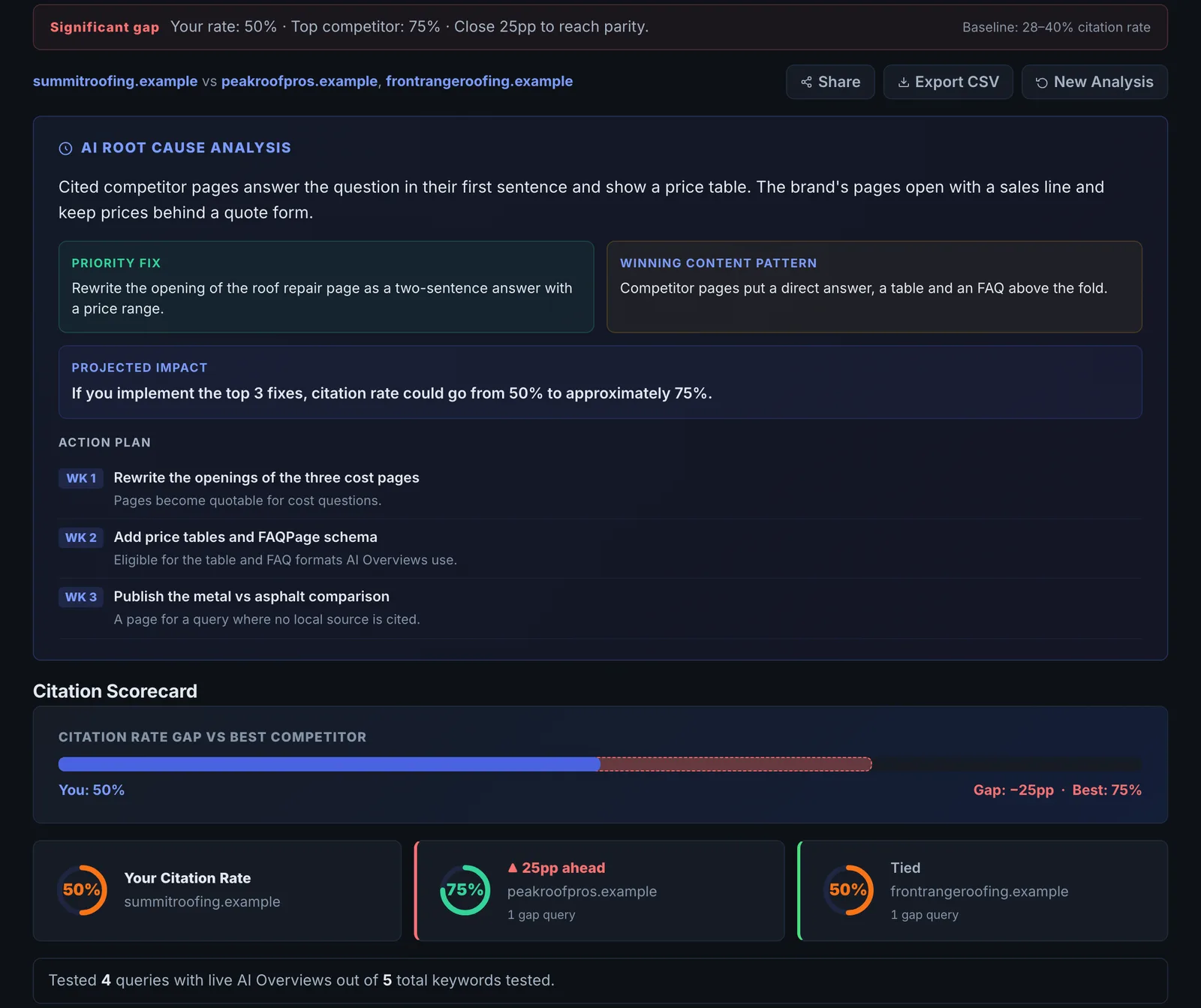
- The page. Theirs answers the question more directly, more completely or with better structure. Citation Gap and Passage Citations show this.
- The fan-out. Theirs covers the sub-questions the engine searches for. Fan-Out Mapper shows which.
- The sources. The list articles, reviews and directories engines read name them, not you. Off-Site Mention Gap finds those pages.
Fixing the page#
- Put a two-sentence direct answer at the top of the section, using the question's own words.
- Add a section for every fan-out sub-query they cover and you do not.
- Add specifics: numbers, prices, named examples, a comparison table.
- Add the schema type that fits, linked to your Organization.
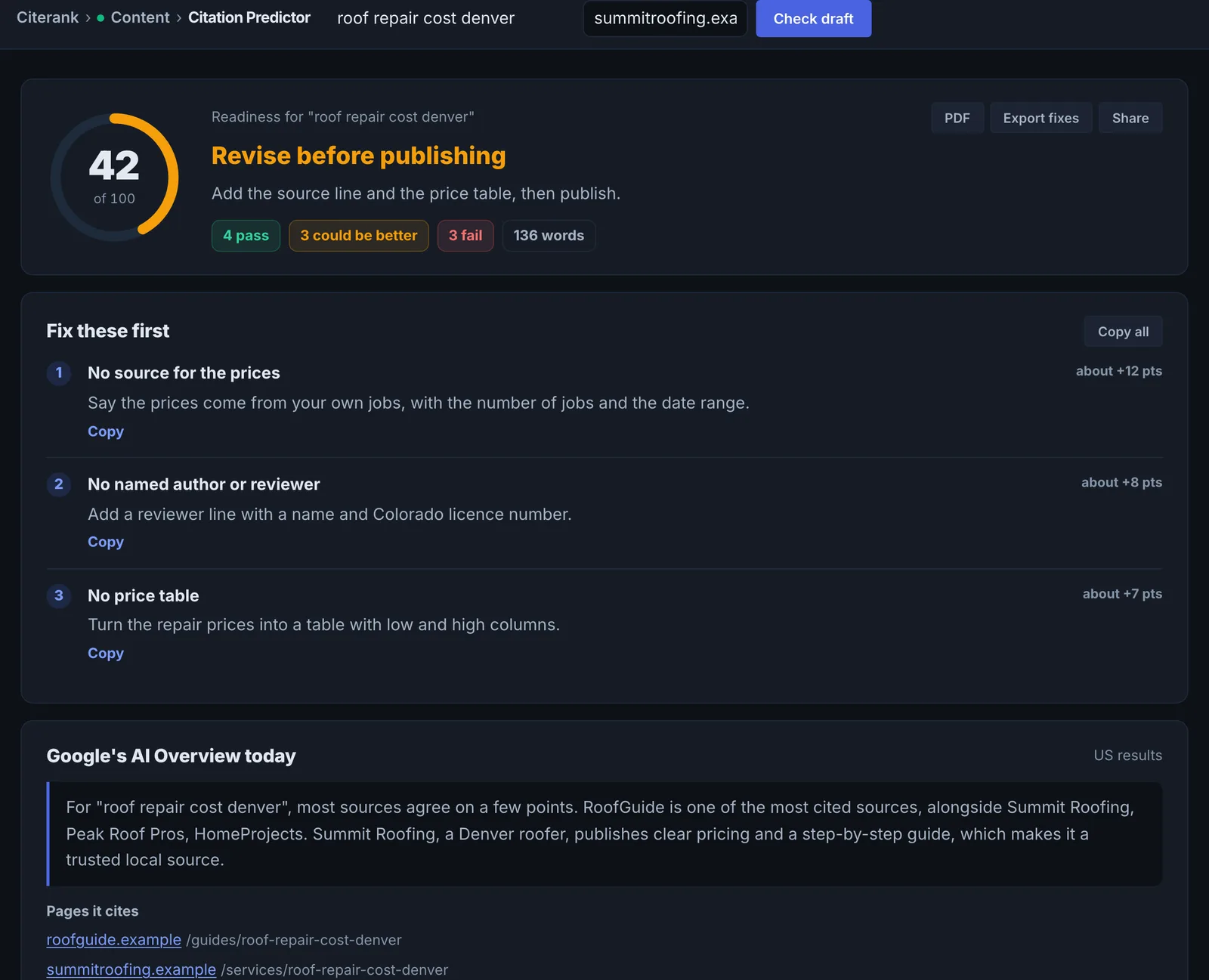
- Check the draft in Citation Predictor before publishing.
Fixing the sources#
Work the off-site list from the source used by the most queries down. A mention in the passage an engine actually reads is worth more than any link.
Proving it#
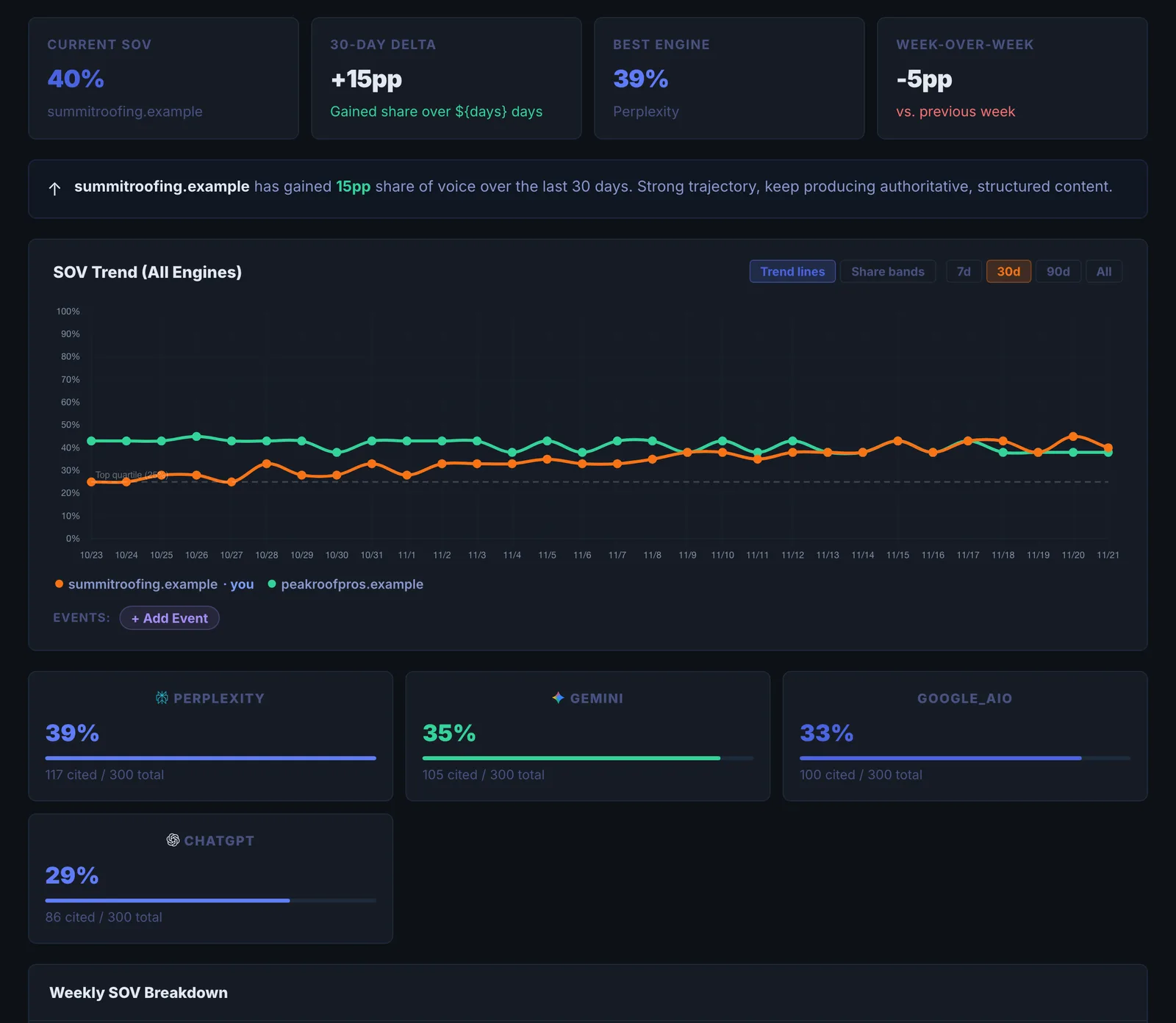
Track the question in Prompt Tracking. Use check now after the page is recrawled, and record a project note with the date of each change so the trend in SOV History has an explanation.
Questions
How long until it changes? #
What if the competitor is a big publisher? #
Something here does not match what you see in the app? Tell us and we will fix the guide.